By Matt Lam, Green Labs Intern | March 3, 2026
Introducing Sustainability Into the Lab
UC Irvine has made great strides in upholding its reputation as a sustainable campus. With the university’s numerous LEED Platinum buildings, sustainable transportation initiatives, and sustainable food practices, the importance of incorporating sustainability into research laboratories is easy to overlook. UC Irvine Green Labs demonstrates how simple green habits in the lab can significantly contribute to achieving UCI’s sustainability goals.
The Green Labs Program highlights how low-cost, low-effort adjustments can drastically improve sustainability in the lab environment. When you certify your lab through simple steps like managing electronics and improving station signage, you do more than just pave the way toward lab sustainability, but also qualify to receive rebates designed to help your lab acquire energy-efficient equipment. See our core sustainable areas below!
Energy Efficiency and Impact
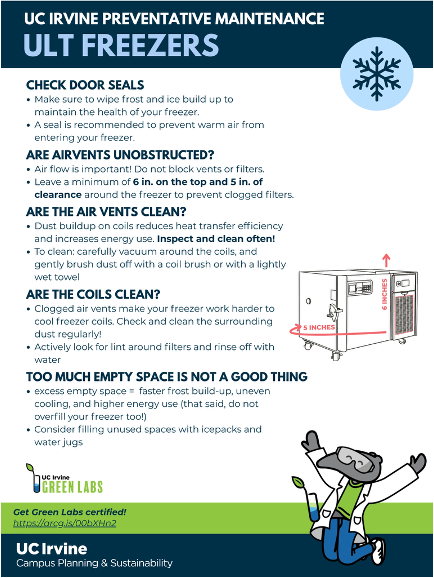
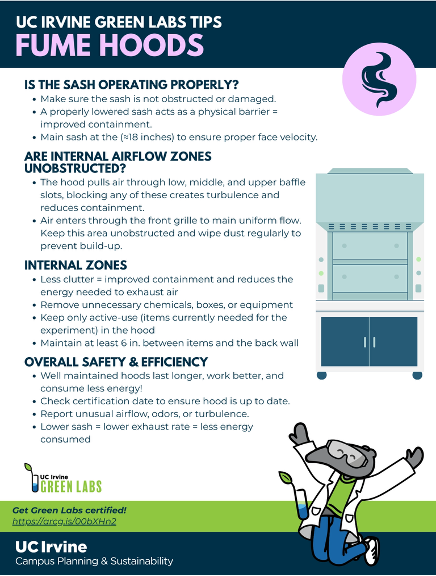
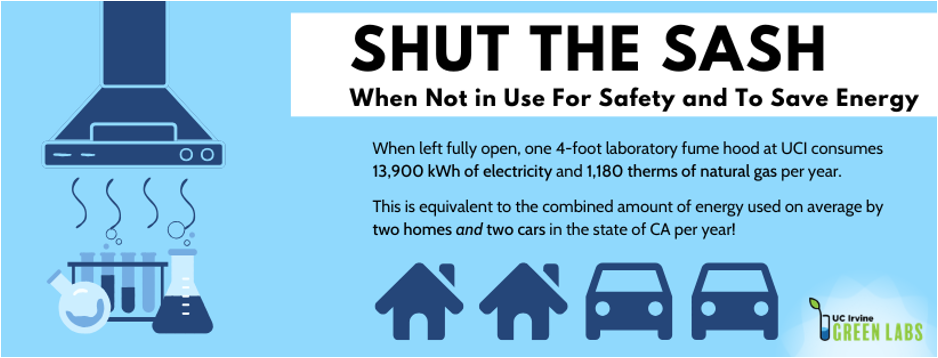
Research laboratories are the primary drivers of campus energy use and consume over two-thirds of the total campus energy—in other words, approximately ten times the energy intensity per square foot than standard office spaces. Ultra-Low Temperature (ULT) freezers are a primary target for energy reduction since a single unit can consume up to 20 kWh per day. You can significantly shrink your lab's footprint by increasing the temperature to -70°C and maintaining at least eight inches of clear space around the unit for optimal airflow. The UC Irvine Green Labs Program provides a variety of resource flyers, featured below, which offer detailed guidance on essential equipment maintenance.
Waste Management
According to data from the National Center for Biotechnology Information (NCBI), an average laboratory student utilizes 23 gloves and seven pipette tips. When factoring in other sources of waste, such as intricate packaging from orders that make proper sorting difficult, laboratories generate massive daily waste streams. The UC Irvine Green Labs Program emphasizes reducing waste through bulk ordering, which cuts down on shipping emissions, while also providing a list of sustainable resources to replace single-use items. Even simple actions like posting clear signage can significantly improve waste sorting accuracy.
Water
Laboratory equipment, such as autoclaves, and routine activities like frequent glassware washing use substantially more water than typical building operations. In addition, undetected leaks caused by insufficient maintenance can waste hundreds of gallons of water each year if left unaddressed.
Green Labs encourages more water-conscious practices through certification actions such as setting dishwashers, glass washers, and other lab equipment to water-efficient cycles if the equipment can safely run so. We also emphasize the importance of regular inspections and promptly reporting any leaks to facilities or maintenance personnel. By consistently applying these practices, they become routine, helping to conserve water and extend the life of your laboratory equipment.
Green Labs also distributes a “Report Water Leaks” sign to be hung near laboratory sinks. This is a helpful, visual reminder to report leaks when noticed. If a leak is left unrepaired, it can result in unnecessary water usage - wasting more than 3,000 gallons of water per year.

Certification
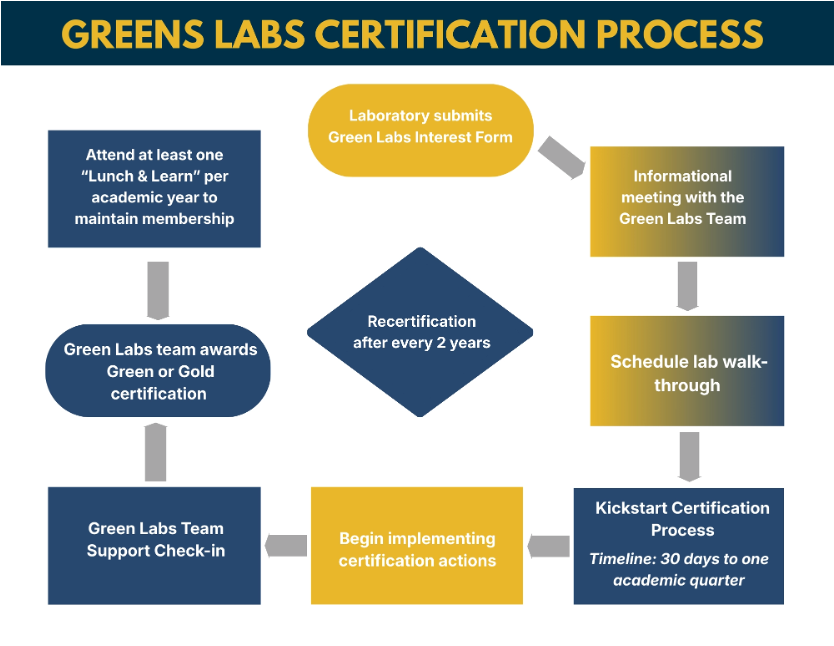
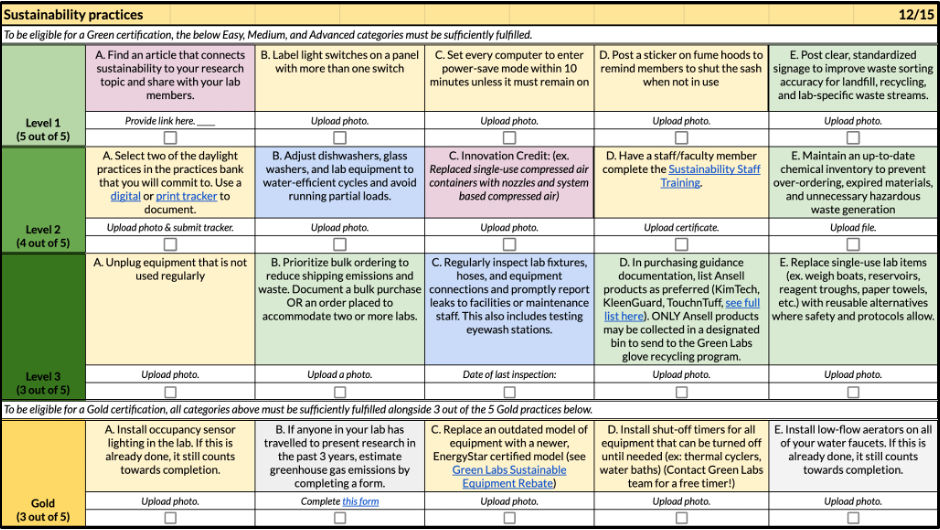
The Green Labs Program is separated into two certification tiers: Green and Gold, with the Green tier being the baseline certification. In order to receive the Green tier, labs need to finish all “Easy”, “Medium”, and “Advanced” categories in the action image below based on the number of required tasks. For the Gold tier, labs will need to complete all of the above, including three out of the five possible certification actions. For more information about the timeline and process of the certification process, please refer to the pictures below. Interested? Email aarushi.g@uci.edu to schedule an info meeting!

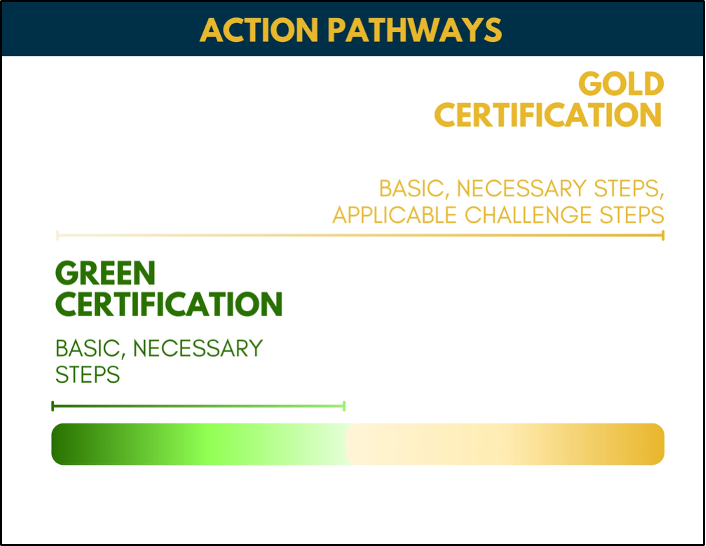
Labs are encouraged to complete the Green Labs certification at their own pace; the process can take just 30 days, but the final deadline is the end of the current academic quarter.